
The Many Faces of Mt. Fuji: Fugaku Hyakkei
Mt Fuji is far more than a fixture of Japan’s skyline; more than the country’s tallest mountain (though it’s technically a stratovolcano), and more than the agricultural weather engine that powers the region’s farms. For believers Fuji is a kami called Konohanasakuya-hime, to whom thousands of years of pilgrims have journeyed to pay their respects; For artists, like Hokusai, it served as a muse for great pieces of art.
Regardless of what Fuji-san means to you, all are in agreement. The mountain means a great deal to the people of Japan.
Fugaku Hyakkei literally translates to “One hundred views of Mt. Fuji". Beyond the geographical scale and the literal beauty of the mountain, this is the idea that one perspective is never enough to understand the truth. As such, actively seeking these hundred views helps you to understand more. We have actively sought out just a few of these, and we wanted to share a selection of them with you.
Mt. Fuji: The Fujinomiya Trail
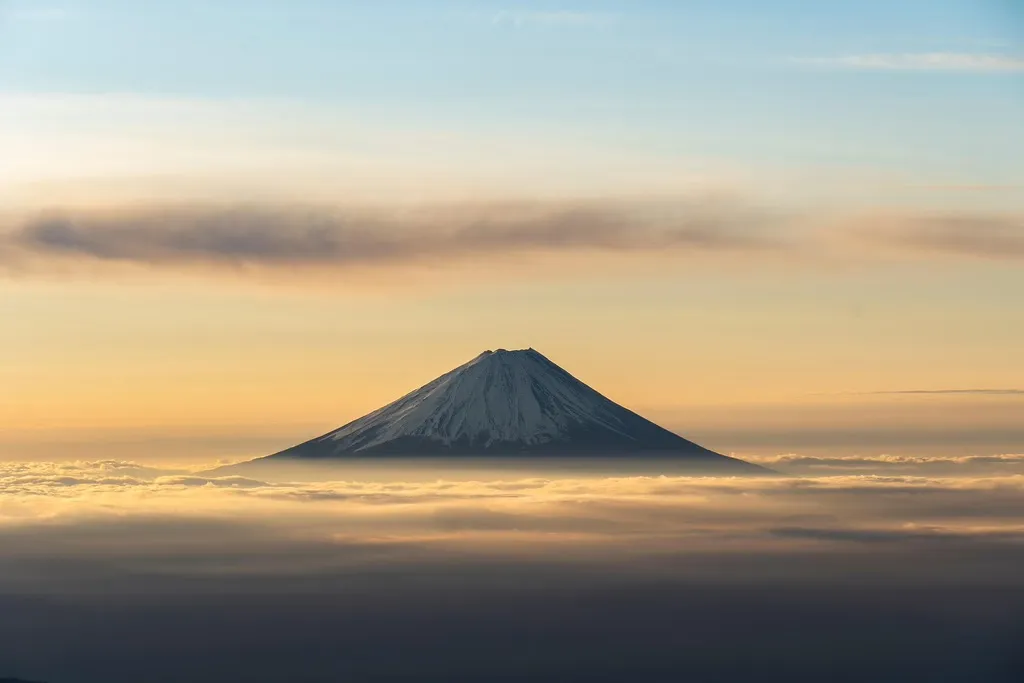
Starting with the the namesake of the Fujinomiya region, Mt Fuji is a fixture in the everyday lives of Nihonjin regardless of where they are. Its likeness is emblazoned on the ¥1,000 bill, and hundreds of thousands of tourists flock to the mountain, just to see it. But climbing it? That’s a different kettle of fish.
How To:
Distance:
8.6km (round trip) Time: 7-10 hours Difficulty: Hard (its steep!)
Route Breakdown:
- The Fujinomiya Route is considered the most difficult of the hardest of the Fuji summit routes, despite it also being the shortest. This is due to the incline, and the volcanic terrain. The route is fairly simple. Starting from Fujinomiya 5th station (2,400m, the highest trailhead on the mountain) you climb through the 6th, New 7th, Original 7th, 8th, 9th, and 9.5th stations. You then summit at the Fujisan Hongu Sengen Taisha Okumiya.
Notes:
- Booking your place to climb Mt Fuji is essential. The Fujinomiya trail opens on July 10th, but pre-registration begins on May 8th.
- A nominal entrance fee of ¥4,000 per person is required for entry to the Fujinomiya trail. This is used by mountain management to fund safety and rescue infrastructure, as well as keeping the trail well maintained.
Recommended Gear
- A good pair of trail shoes!
- Warm clothes - the summit often reaches 0°c, despite climbing season being in the summer.
- Water - Beverages and additional supplies get more expensive as you climb the mountain
- Money - Notes for the huts and snacks, coins for the mountainside toilets!
Insider Knowledge:
While the main peak of Mt. Fuji (Kengamine Peak) is what most people travel for, many hikers miss out on Hoei Zan because of it. Hoei Zan is Fuji’s largest volcanic crater. Rust red, and volcanic black, the crater came to be in a massive 1707 eruption. Unlike the peak, however, Hoei Zan requires no permit or prior booking, and a lot less planning to summit. It can be reached by heading to the 6th station on the Fujinomiya trail, and following the signs for Hoei-Zan or Hoei Crater. The terrain here is much looser than the main trail, so we recommend that you only attempt it if you’ve brought your hiking boots with you.
Beyond The View
On a national level, the significance of Mt. Fuji is obvious; national pride, religious keystone and international beacon of tourism. However for Fujinomiya natives like Taiki, it’s become an identity for the community. Fujinomiya translates to “Shrine of Mt. Fuji”, and it is filled with something locals call “ Pilgrim Spirit”. Because the town has been a famous destination for so long, the locals have a unique DNA of warmth and open-mindedness toward outsiders. This spiritual connection is anchored by the mountain’s water, where it is incorporated with purifying ceremonies and Matsuri, as well as the produce of the region.
How to get there from SLEEEP Fuji:
- Walk to the Fujinomiya Station bus terminal. [Google maps location]
- Board the shuttle bus at platform 6 to Mt. Fuji 5th Station.
- Start hiking!
and find directions from EXP._Atelier right here
Shin-Shin
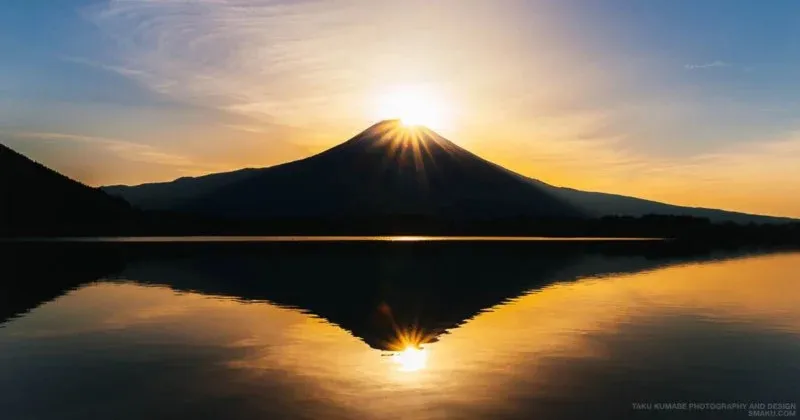
Shin-Shin literally translates to “New New”, it refers to the views you get on the hike of the ‘new’ Fujinomiya suburbs, and the ‘new’ volcanic peaks of the foothills. The route consists of lush forest, the famous Tanuki lake, and an ascent of the Tenshi ridge (Tenshigatake and Chojogatake).
How To:
Distance:
12km (loop) Time: 5-6 hours Difficulty: Moderate
Route Breakdown:
- Start at Lake Tanuki. Climb through dense cedar forests to the summit of Mt. Chojogatake (1336m). Follow the ridge south to Mt. Tenshigatake (1291m) before descending back toward the lake.
Notes:
- No permits or bookings required. Best in spring for blossoms or winter for clear "Diamond Fuji" views.
Recommended gear
- A good pair of trail shoes!
- Supplies - There are no amenities after the start of this hike, so take all the supplies you need with you.
Insider Knowledge:
On April 20th and August 20th the sun rises on the East face of Fuji, and it perches exactly in the centre of the mountain's crater. The sunburst mimics a glowing diamond sitting atop a pedestal. While Diamond Fuji can be seen from many spots around the mountain, Lake Tanuki (the base for your Shin-Shin trek) is world-famous for it as it perfectly reflects the view - hence the double diamond namesake. Hundreds of people gather at dawn to take photos of this twice a year occurrence.
We also recommend before your hike you visit Mame no ne, a family run cafe/food truck with excellent coffee and pastries.
How to get there from SLEEEP Fuji:
- Head to platform 2 of the Fujinomiya bus station.
- Get on the Fujikyuko Bus, bound for Kyumakura Fuji, or Tanukiko Campground
- Disembark at Tanukiko Camp stop, and walk towards the trailhead for the Tenshi ridge.
and find directions from EXP._Atelier right here
The Shiraito and Otodome falls
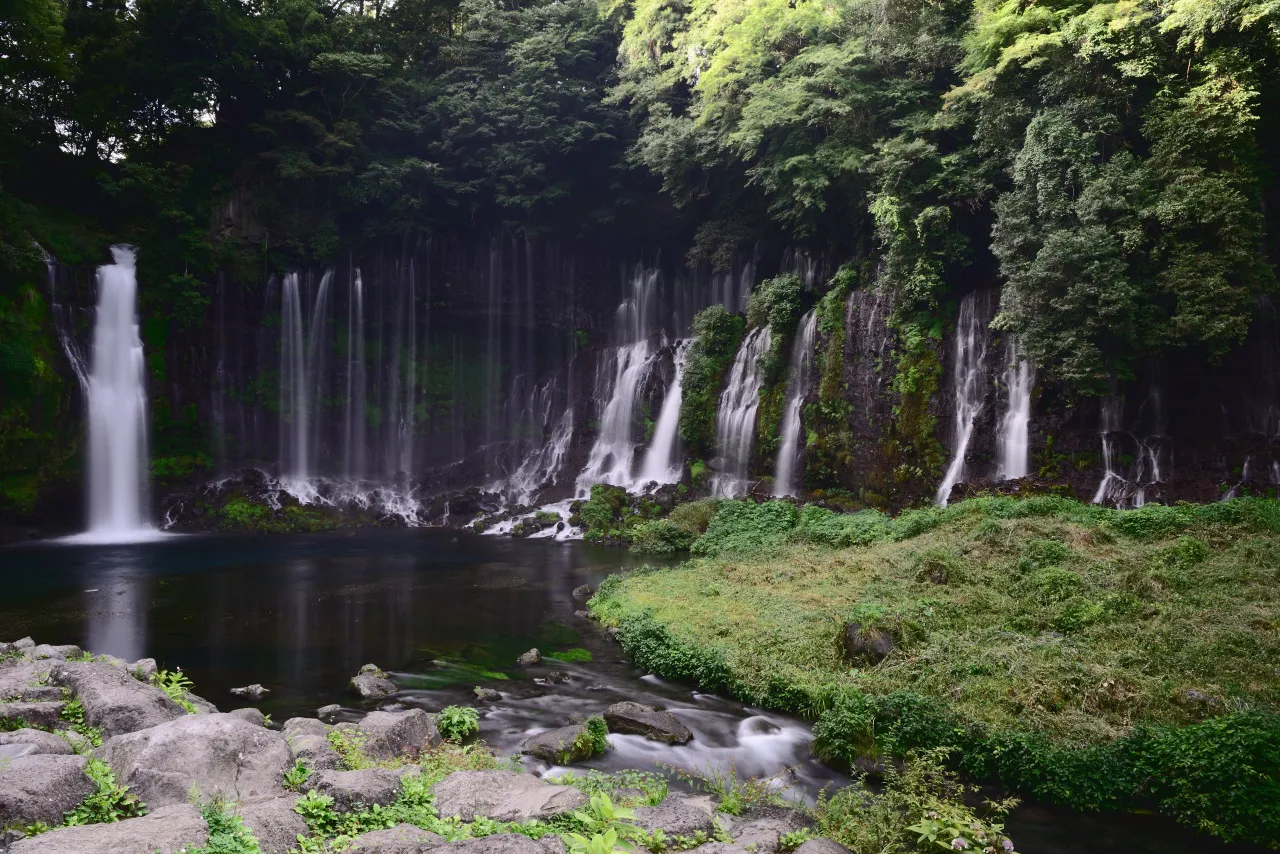
Though not technically a hike, The Shiraito falls are a must see destination for any Fujinomiya travellers. Neighbouring Otodome are a fixture of the Japanese legend of “The Revenge of the Soga Brothers”. Both destinations are easy and unmissable spots to tick off your Fujinomiya to do list.
How to get there from SLEEEP Fuji:
- Once again, head to the Fujinomiya bus station Platform 2 and catch the Fujikyuko bus bound for Shiraito-no-taki
- Once you get off the bus, head to waterfall plaza, a location full of vendors selling yakisoba and oden. (Take a miss on the Yakisoba here and head to the spot that Taiki
- Take a look at the signposted Otodome falls, and then continue on to the signposted Shiraito falls.
and find directions from EXP._Atelier right here
History
Though not a hike, Shiraito and Otodome are tied into Japanese history by the First Shogun, Minamoto no Yoritomo and his Fuji no Makigari (Grand hunting party).
Shiraito is famed for being a quiet point of contemplation for the Shogun, whereas Otodome is the site of one of the sandai adauchi (Three Great Revenges). The other two revenges are the Igagoe Vendetta, and the Akō Vendetta (of 47 ronin fame).
The revenge of the Soga brothers included the assassination of their fathers killer, as well as a failed assassination attempt on the Shogun himself. The brothers were said to have conducted the scheming of this assassination behind a rock that can be found to the east of Otodome falls.
Hitoana Fuji-ko Iseki
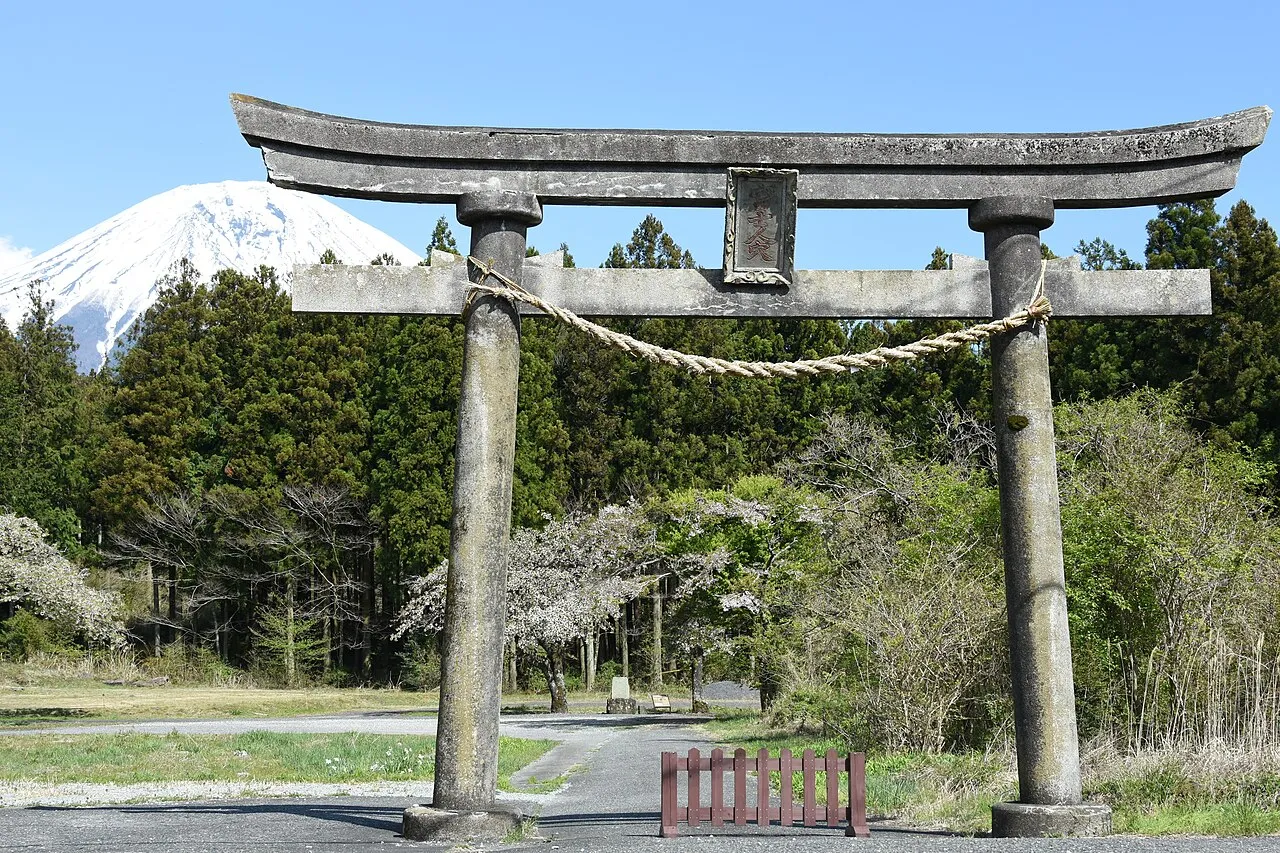
Hitoana Fuji-ko Iseki is a key historical site in Fujinomiya. The location is home to a sacred volcanic cave and a "forest" of over 200 stone monuments. It is famously known as the spiritual birthplace of the Fuji-ko faith and the site where its founder, Hasegawa Kakugyo, attained enlightenment.
How to get there from SLEEEP Fuji:
- Once again, head to the Fujinomiya bus station Platform 2 and catch the Fujikyuko bus bound for Hitoana Fuji-ko Iseki
- Disembark at Hitoana Fuji-ko Iseki and follow the signs!
History
The Fuji-ko faith was a popular movement popular in the Edo period; they believed that any person, regardless of status, could achieve spiritual purification and worldly prosperity by climbing the mountain or praying at its sacred sites. Hasegawa Kakugyo, the ascetic founder of the faith, meditated in Hitoana lava cave for 1,000 days, often standing on a small wooden block. Through this practice, Kakugyo attained enlightenment and eventually passed away inside the cave, turning it into a revered location for the Fuji-ko.
The site is surrounded by over 230 stone monuments. These were not built by the state, but by individual ko (pilgrim groups) from across Japan. Each stone serves as a record of a group’s devotion, often marking their number of successful climbs or honouring their spiritual leaders.

