
How to Climb Mt. Fuji from Fujinomiya
Mt. Fuji has four trails to the summit. Most people end up on the Yoshida trail because it's the most written about and the easiest to reach from Tokyo. It's also always packed. The Fujinomiya trail is the better option. It's shorter, starts from higher up the mountain, and the trailhead bus is a two-minute walk from SLEEEP.
Here's everything you need to get from your capsule to the crater.
.webp)
Why the Fujinomiya Trail?
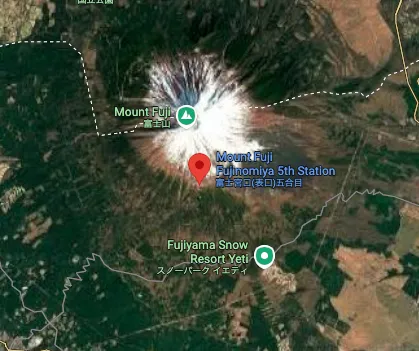
The Fujinomiya 5th Station sits at 2,380m, the highest starting point of the four trailheads. Because you're starting higher, the distance to the summit is shorter. 4.3km up, 4.3km back, 8.6km in total. The gradient more than makes up for it though. This trail is steep and the terrain above the 7th station gets seriously rocky. The ascending and descending paths are also the same trail, so you'll be sharing narrow sections with people going both ways. The Yoshida has separate routes for up and down. The Fujinomiya doesn't.
If you're reasonably fit and up for a real challenge, this is the trail. It also makes the most sense if you're coming from western Japan, since Fujinomiya connects directly to the Tokaido Shinkansen. And if you're already here, the choice makes itself.
Staying at SLEEEP Fuji
Getting a proper night's sleep before a Fuji climb matters more than most people factor in. SLEEEP Fuji is a capsule hotel a two minute walk from Fujinomiya Station. The pods have adjustable lighting and good ventilation, and the mattress quality is genuinely good, which is the thing that matters most the night before a long climb.
The staff speak English and there's luggage storage, so you can leave your main bag and just take a daypack up the mountain. An Aeon Mall and a 7-Eleven are both within walking distance if you need any last-minute supplies.
The front desk closes at 6pm. If you're arriving after that, make sure to complete your pre-check-in for easy entry.
The evening before the climb, take a walk to Fujisan Hongu Sengen Taisha Shrine. It's close to SLEEEP and one of the great shrines in Japan. If you're the spiritual type, a good spot to ask for clear weather on the day.
.webp)
Before You Do Anything: Register
This is the step most guides mention in passing and bury at the bottom. We're putting it here because if you don't do this before you travel, you'll be standing at the trailhead in a queue while everyone else is already climbing.
All climbers on the Shizuoka side of the mountain (Fujinomiya, Gotemba, and Subashiri trails) need to pre-register and get a climbing permit before they can start. The permit is checked at the 5th Station gate.

How to Register
- Download the Shizuoka Prefecture FUJI NAVI app on your phone. It's free, available on the App Store and Google Play, and works in English and six other languages.
- Create an account.
- Complete the pre-learning module. This is a short e-learning course covering safety, trail etiquette, and environmental rules. Read through it and pass the test at the end. You need full marks, but the questions are straightforward if you've read the content.
- Enter your climbing details: date, name, and whether you'll be staying in a mountain hut.
- Pay the ¥4,000 entry fee per person.
- You'll get a QR code in the app. This is your climbing permit. Show it to staff at the trailhead gate on the day.
The whole process takes about 10 to 15 minutes. If you'd rather not use the app, you can also register via the web at fujisan223registration.com
You can cancel for a full refund up until the day of your climb. Once your permit has been scanned at the gate, that's it. If you're planning to start between 2pm and 3am for a sunrise attempt, you need a mountain hut booking. This is checked at the gate. The FUJI NAVI app doesn't make hut reservations, so contact the huts directly.
If you arrive without pre-registering, you can complete the process on-site at the 5th Station. Budget an extra 30 minutes and possibly a queue. Just do it beforehand.
Getting to the 5th Station
Walk to Fujinomiya Station (two minutes from SLEEEP) and board the climbing bus to Fujinomiya 5th Station from Platform 6. The journey takes around an hour. Return tickets are approximately ¥4,000 and seat reservations aren't required.
At weekends, national holidays, and August 13 to 16, buses also run from Shin-Fuji Station on the Shinkansen line. Handy if you're coming from Tokyo on the day of your climb.
Driving? Private vehicles are restricted on the Mt. Fuji Skyline for the entire climbing season. Park at Mizugazuka Parking and take the shuttle bus (around ¥2,000 return, roughly hourly from 6am to 5pm) or a taxi (around ¥4,750 one way) up to the 5th Station.
When you get to the 5th Station, don't start climbing straight away. Give yourself at least 30 minutes at altitude first. The bus up from Fujinomiya is fast and your body needs time to catch up to 2,380m. Altitude sickness ruins more Fuji climbs than bad weather ever does. Pick up a trail map from the General Information Centre and use the toilets while they're free (¥100 to ¥300 per visit further up). Have something to eat before you start.
The trailhead is in front of the information board, next to a monument to Sir John Rutherford Alcock, the first Englishman to officially summit Fuji, back in 1860.
The Climb
5th to 6th Station
The opening stretch is a gentle slope of volcanic sand and gravel. Almost pleasant. Don't let it fool you.
At the 6th Station you'll pass two mountain huts, Unkaiso and Hoeisanso, where the Hoei-zan trail also branches off (more on that in Insider Tips). From here the ground turns harder and rockier and the gradient picks up.
6th to 7th Station
This is where it starts to feel like a proper climb. You'll use your hands in places. The views open up. Take your time and rest when you need to.
The 7th Station comes in two parts: the New 7th (Goraikou Sanso) and the Original 7th (Yamaguchi Sanso). Both have food and somewhere to sit.
7th to 8th Station
Above 3,000m the air is thin and the slope doesn't ease up. This is not the section to push through quickly.
At the 8th Station, Ikeda-kan mountain hut is next to the Mt. Fuji Sanitation Centre, a first-aid station with doctors available around the clock during climbing season. If you feel unwell rather than just tired, go there. No summit is worth pushing through altitude sickness.
8th Station to Summit
The 9th Station (Mannen-yuki Sanso) and the 9.5th Station follow. The 9.5th is called Munatsuki Sanso, which translates roughly as the Chest-Pounding Hut. By the time you get there, the name will make sense.
Through the torii gate just below the top, you'll reach the summit shrine, Fujisan Hongu Sengen Taisha Okumiya. The actual highest point of Japan, Kengamine at 3,776m, is a few minutes' walk around the crater rim. If you have the legs and the weather is clear, do the full crater rim walk. It takes about an hour and the view changes from every angle.
There's a postbox at the summit. The postmark says 3,776m. Worth sending one to friends and family at sea level.
One Day or Two?
Two days is the right answer. The trailhead closes between 2pm and 3am for anyone without a mountain hut reservation, so an overnight push to catch the sunrise isn't possible without a booking anyway. The standard approach is to reach a hut at the 7th or 8th Station on day one, rest overnight, and summit early the next morning. The extra time at altitude makes a real difference to how your body handles the climb.
Book huts well in advance. August fills up fast, and Obon Week in mid-August is particularly busy.
What to Pack
- Hiking boots or trail runners with ankle support. Trainers will punish you on the rocky upper sections.
- Warm layers. The summit regularly hits 0°C in summer. The base might be 25°C when you set off.
- A windproof outer layer.
- Rain gear. Fuji generates its own weather and it can change quickly.
- A headlamp. Descents can run longer than expected.
- At least 1.5L of water and enough snacks to stay functional. Huts sell supplies but the prices reflect where you are.
- Cash. Notes for huts, coins for toilets. No card machines above the 5th Station.
Gear is not sold at the 5th Station. Sort everything before you leave Fujinomiya.
Pick yourself up a traditional wooden hiking stick (kongō-zue). You can buy these full-length or mini wooden staffs at the 5th Station shop before you start. Every mountain hut you pass has a unique hot-iron brand (yakuin) they will burn into the wood for a small cash fee (usually ¥300 to ¥500). By the time you reach the summit, your stick becomes a record of your climb.
These staffs are deeply rooted in history, originally carried by Yamabushi (mountain ascetics) and pilgrims. Their distinct octagonal shape represents the eight peaks surrounding Mt. Fuji's crater, as well as the eight petals of the sacred Buddhist lotus flower.
.webp)
The 2026 Season: Quick Reference
- Trail open: July 10 to September 10, 2026
- Entry fee: ¥4,000 per person via Shizuoka FUJI NAVI app or fujisan223registration.com
- Pre-registration opened: May 8, 2026
- Night climbing: Trailhead closed 2pm to 3am without a mountain hut booking
- Private vehicles: Restricted during season, park at Mizugazuka Parking
Check live conditions and trail info before you go at fujisan-climb.jp/en.
The Fujinomiya trail is hard work. The gradient and the terrain make sure of it. Getting from SLEEEP to the summit and back is deeply satisfying though. Register before you go and bring a warm jacket.

