
The Classroom Without Teachers
Delivering Beyond, Part 1 of 3 · Kakuma, Kenya
Returning eighteen years later, with a mission to accomplish.
Eighteen years ago, in my early twenties, I lived for six months in Arusha, Tanzania, at the foot of Mt. Kilimanjaro, working as a volunteer teacher and documentarian. I had read an article about Kilimanjaro's melting glacier and the climate refugees it would create. I didn't want to know those people as a number. I wanted to know them by name. So I went to take in the realities rather than read about them. There, I saw a world different from the one I grew up in, made many local friends, and found the direction for my life. It became the seed of what we do at EXP. today, without ever being made explicit.
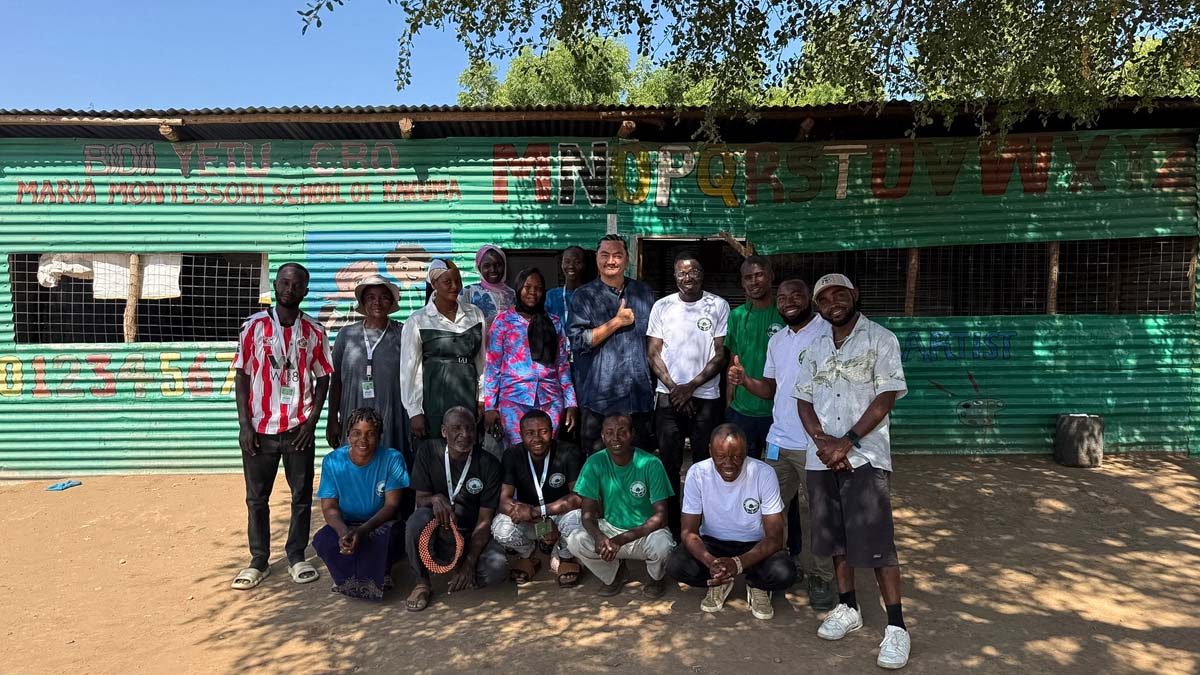
Eighteen years later, through the parents of my son's schoolmate, I met Vincent, a French gentleman who feels a responsibility to give back to Africa for what Europeans have done to the region. He introduced me to Martin, the founder of Bidii Yetu, an NGO working out of Kakuma refugee camp in northern Kenya. Bidii Yetu provides work and education for people who have otherwise fallen outside the world's concern.
Martin and I first met over a video call in 2025. I learned that one of his challenges were not having enough teachers. Around the same time, I had heard that since Hong Kong introduced its e-waste tax, even low-income families there no longer accepted refurbished computers. So I asked Martin whether they had power and internet. They did. That is how C.U.P., our Computer Upcycle Project, was born under EXP.LEARNING.
Caritas, one of Hong Kong's best-known NGOs, provided the training and the computer parts. Pui Ching Middle School provided the team of students to do the refurbishing, led by Mr. Chan, who was my own Design & Technology teacher back when I was a Pui Ching student. Watching your old teacher show a new generation how to fix things makes you feel very proud and slightly ancient at the same time. After a full day of taking apart machines someone had decided were rubbish and bringing them back to life, the students had finished nineteen laptops.
Experience has taught us that shipping valuables to many parts of Africa is difficult, let alone nineteen laptops to the heart of a refugee camp. I also hold a stubborn principle: I don't send help through a middleman if I can carry it myself. So we chose to deliver them in person.
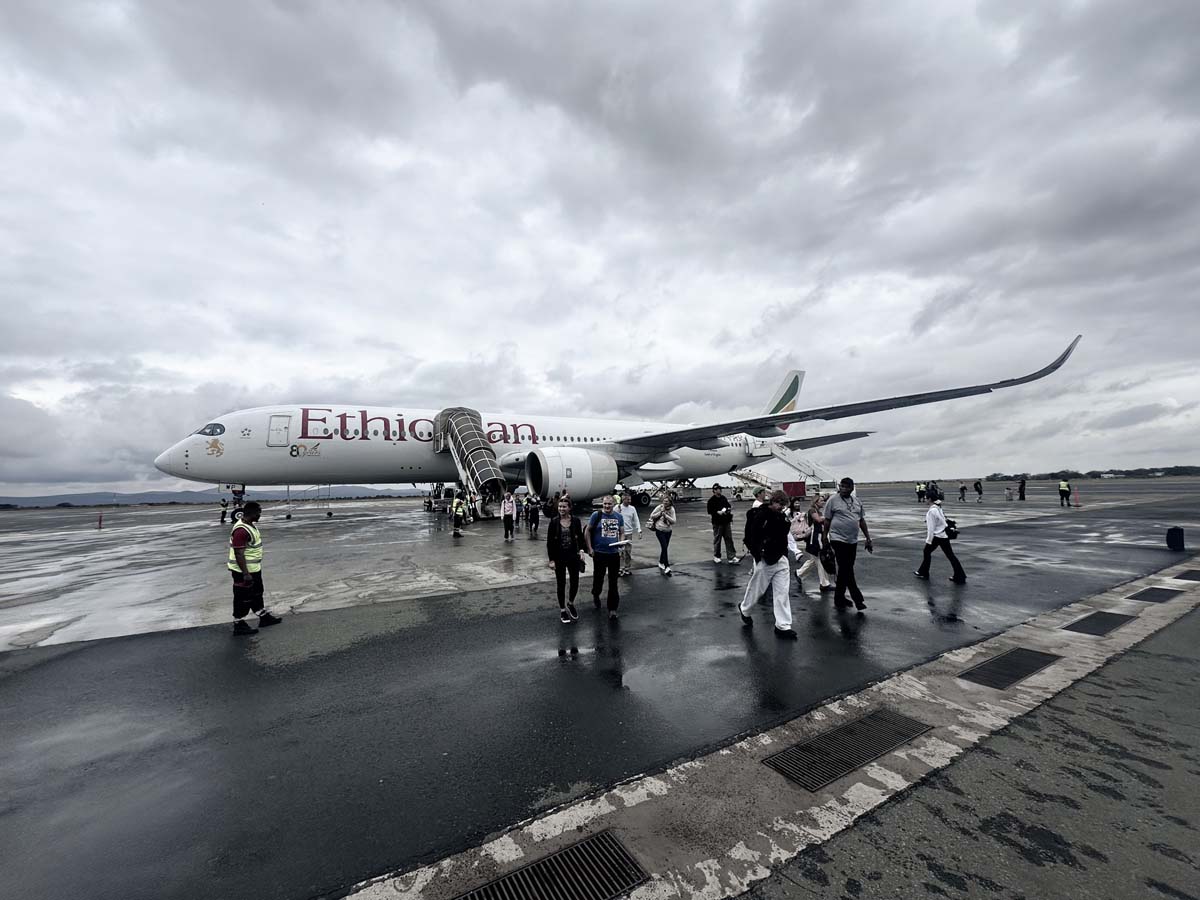
It took more than nine months and two postponements to make the trip happen. On 30 August 2026, we finally left Hong Kong International Airport, flying through Ethiopia to Arusha. All nineteen laptops arrived safely.
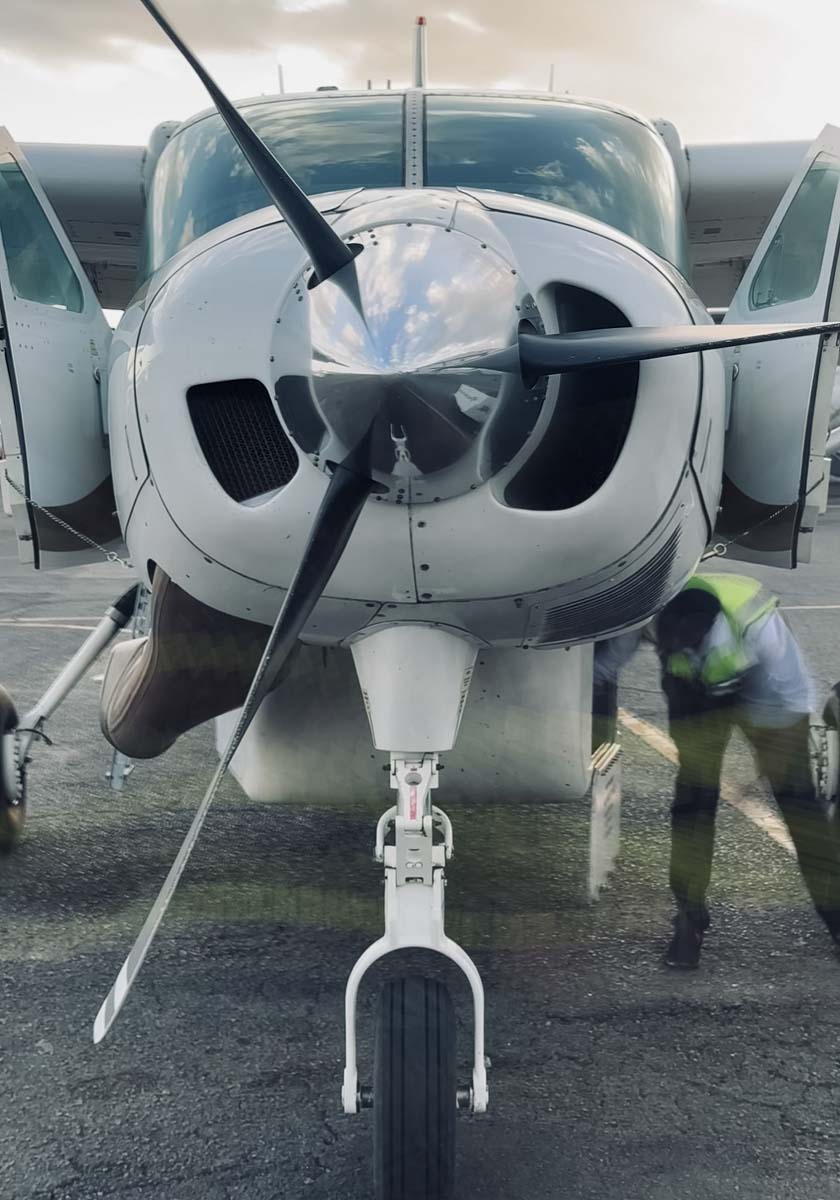
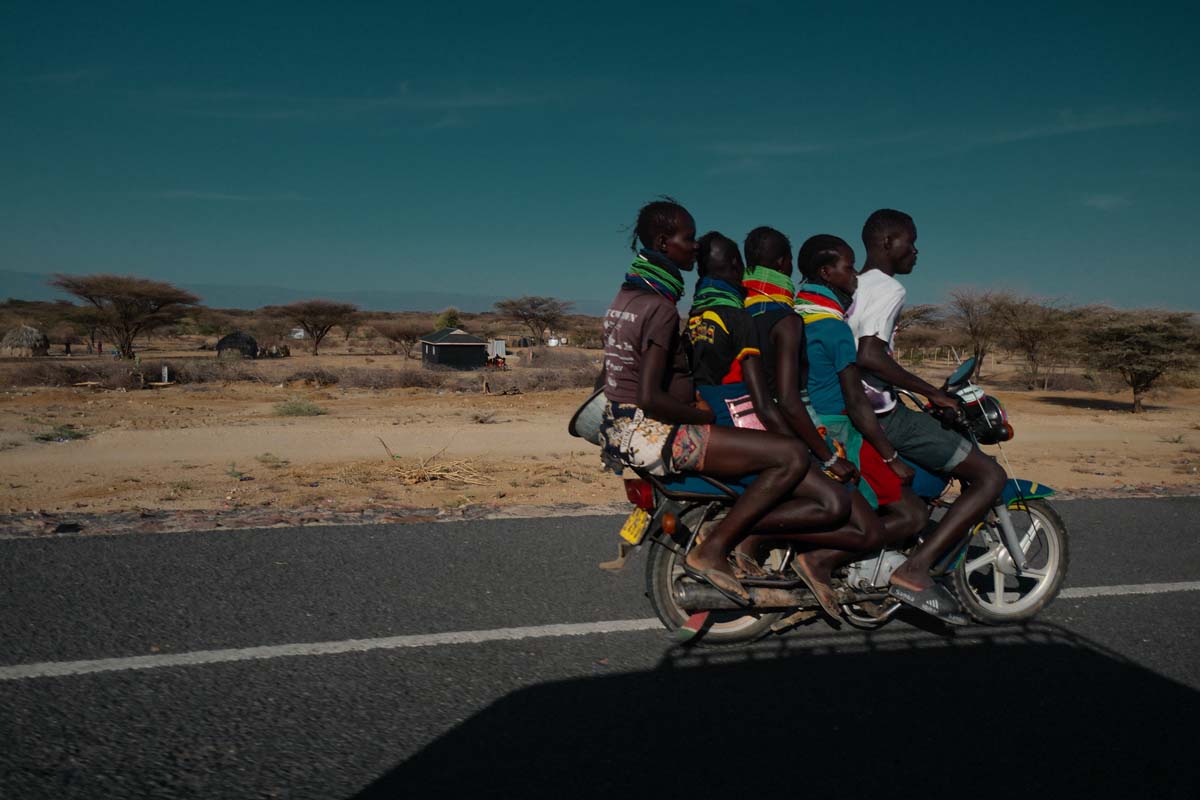
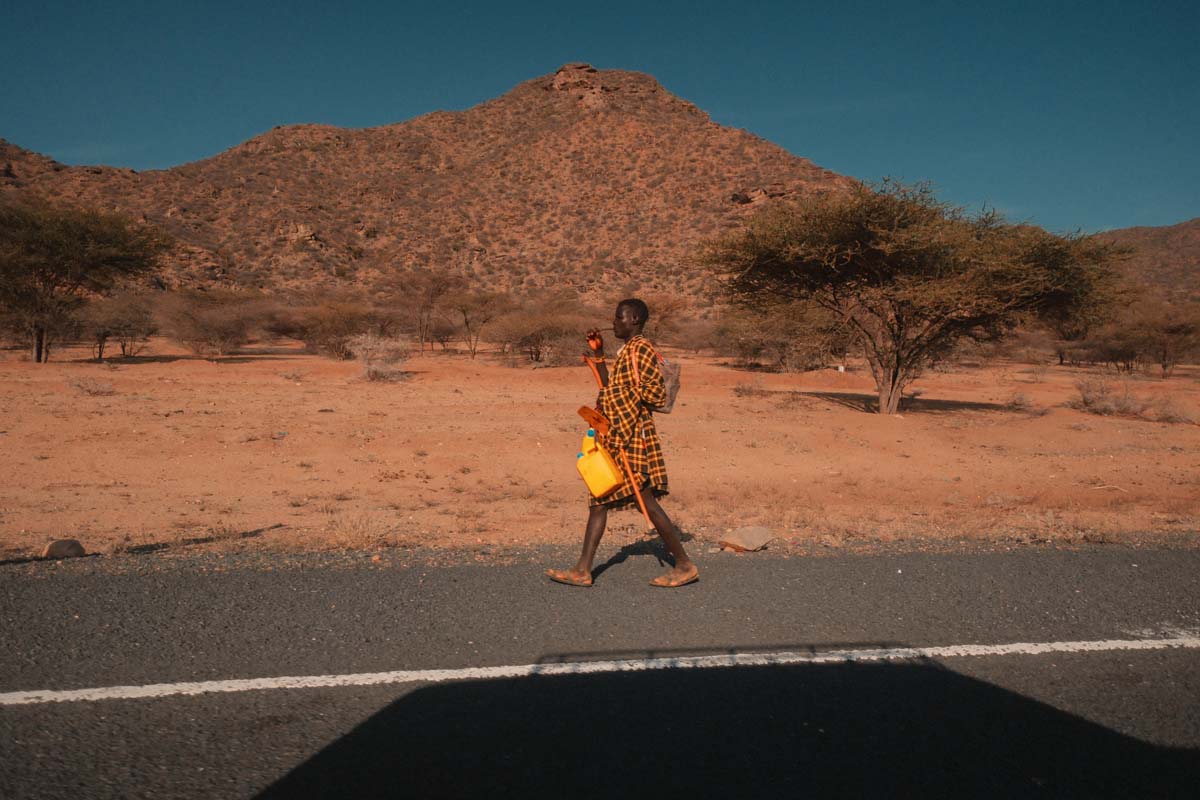
Three of us carried them on to Kakuma. Janis Chan, our journalist-in-residence, came with me from Hong Kong. Gody, who drove our volunteer group around Arusha eighteen years ago, joined us from Tanzania. Vincent couldn't join us this time, but he had made the journey to Kakuma himself earlier this year. Door to door, Hong Kong to the camp took four flights and three long car rides. We reached Kakuma on 2 September.
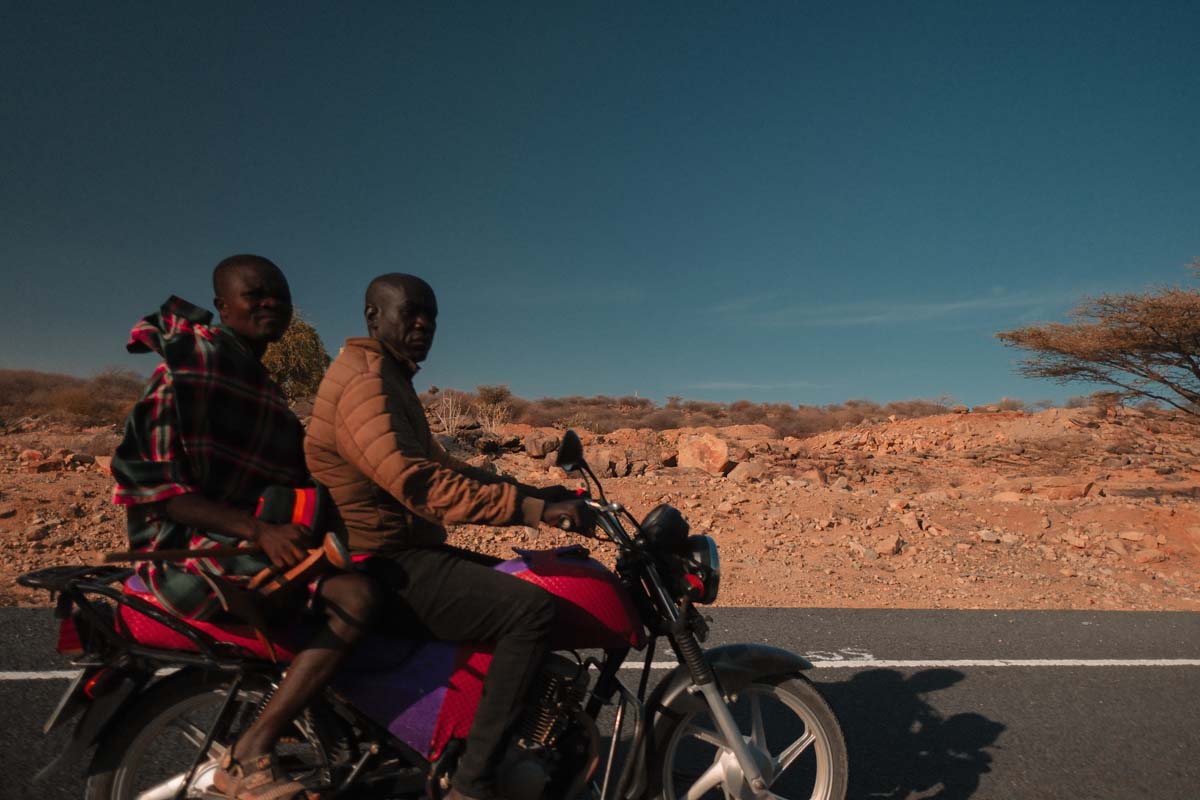
Nineteen laptops reached Arusha. Sixteen are working in Kakuma now. Three didn't make it: Cracked screens, failed battery, faulty charge modules; I say that plainly because the story isn't neat, and I don't want to pretend it is. Other than the computers, the electricity and internet that we knew were there were far from enough to support this new array of technologies. We needed more power, and more data.
So that evening after learning of the fact, Janis, Gody and I discussed the feasibility of redirecting some of our budget to instead help them build out a better solar power system and install Starlink for stronger internet. We executed the plan the next day after the ground quotations matched 90% of the cost estimate I got from Claude, I knew those were good enough numbers.
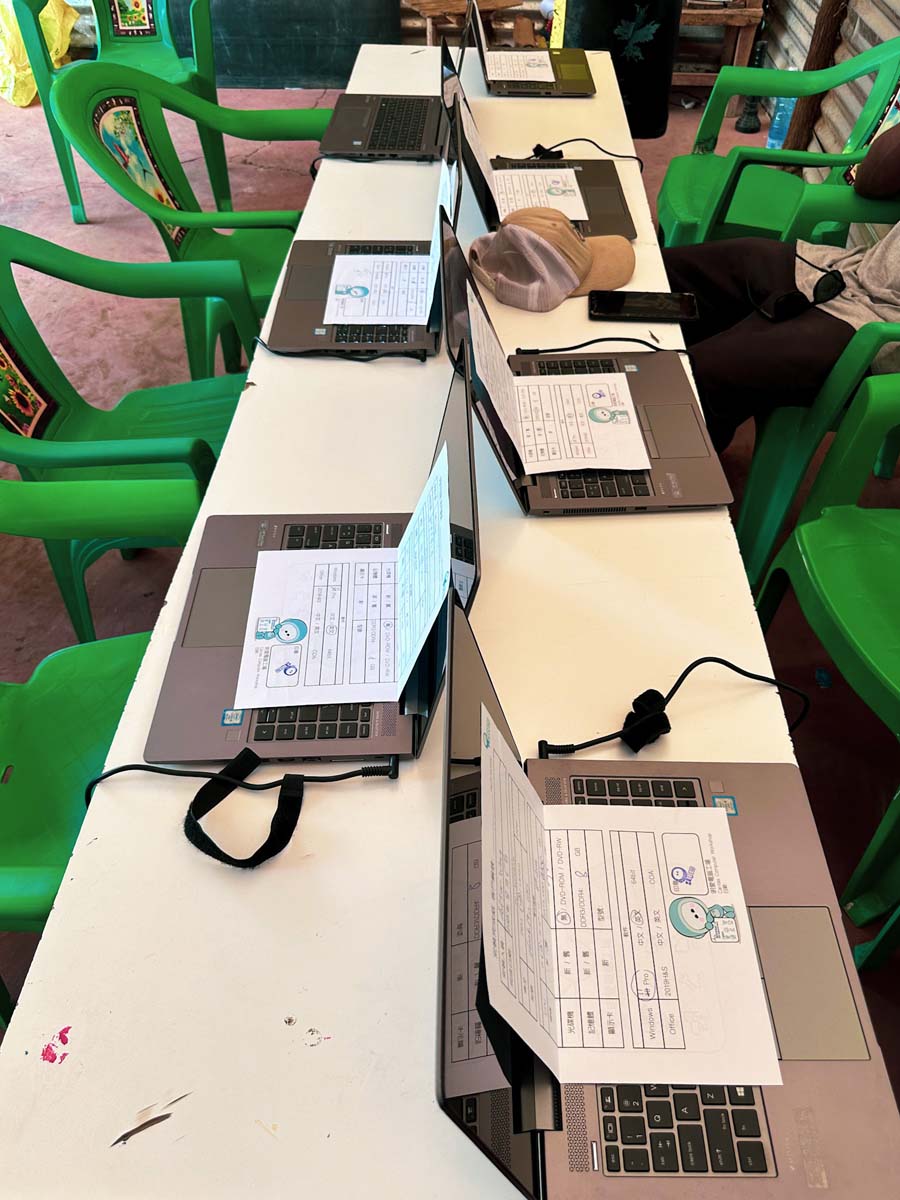
The young people in Bidii Yetu's youth group left high school. Most of them were not going to go to college, for one reason or another. There are no teachers here: not too few, none. The first idea was simple. Give them a computer lab and let them teach themselves.
But a room full of computers can easily become a place to kill time. So we suggested something more: let the young people run it as an internet café for their community. The café runs on solar power and Starlink internet. They serve their neighbours, earn an income, and learn what it feels like to run something of their own. Nothing teaches you about entrepreneurship quite like your first paying customer.
The laptops are the tools. The café is the point: earning, serving, and the kind of hope that comes from building something rather than receiving it.
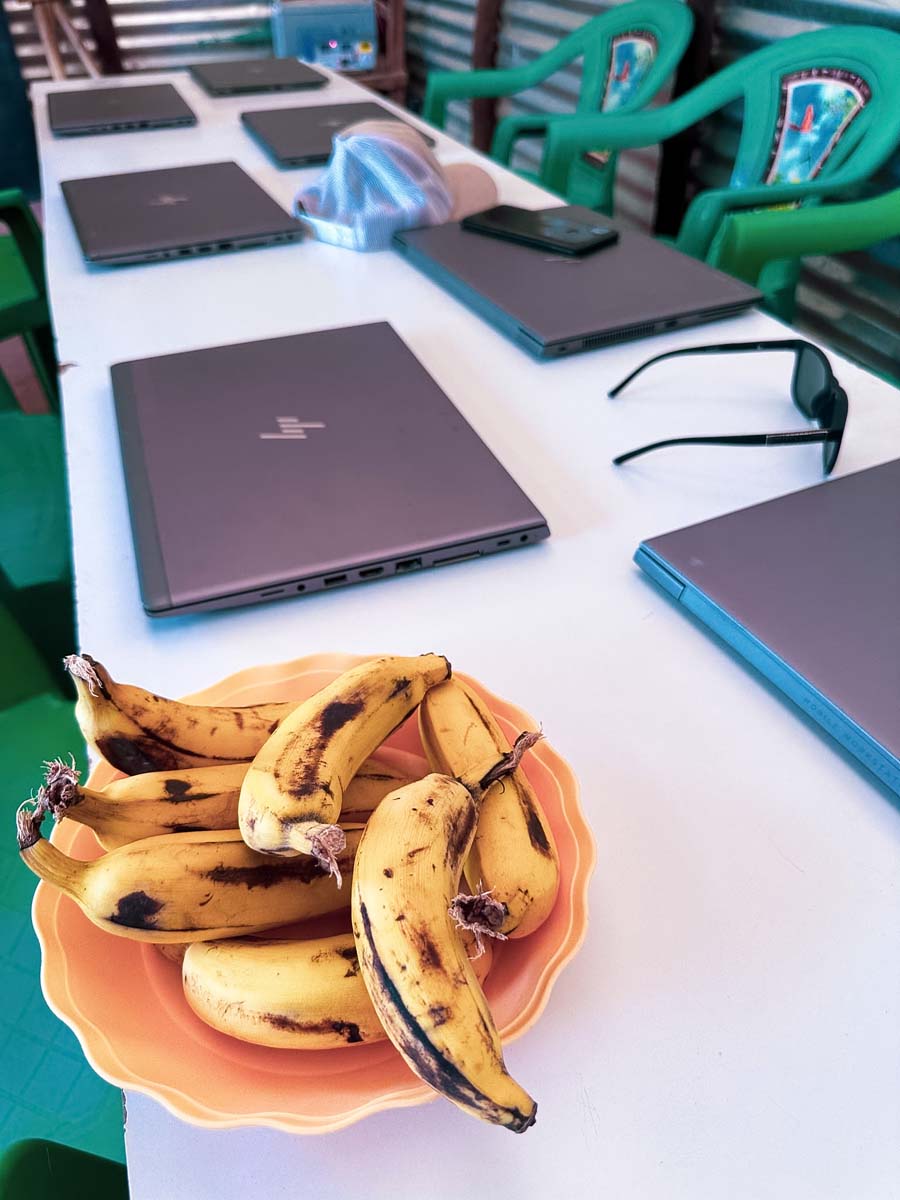
Inside, the laptops sit in a row on long white tables, each with a green plastic chair pulled up to it. Someone has put a plate of bananas beside them. The students felt welcomed, being invited into a new endeavor.
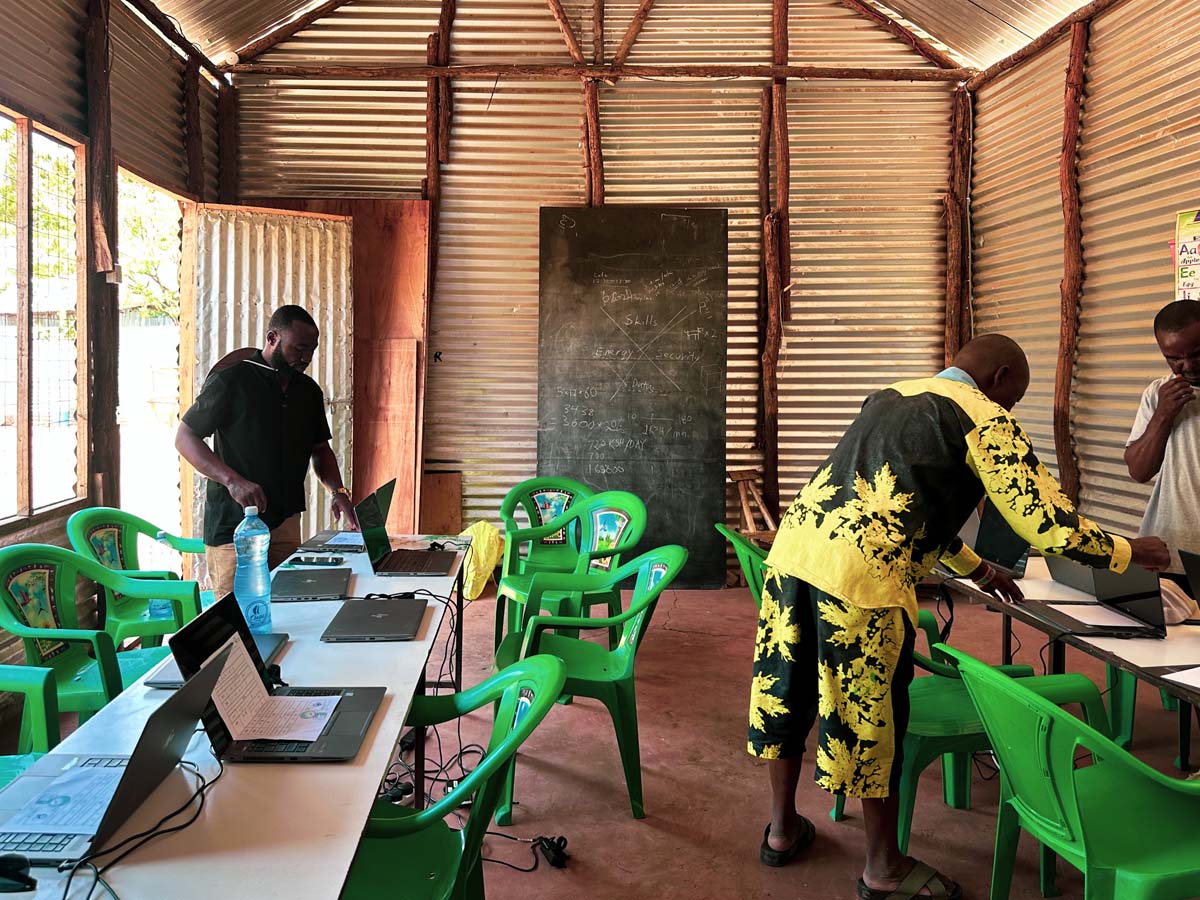
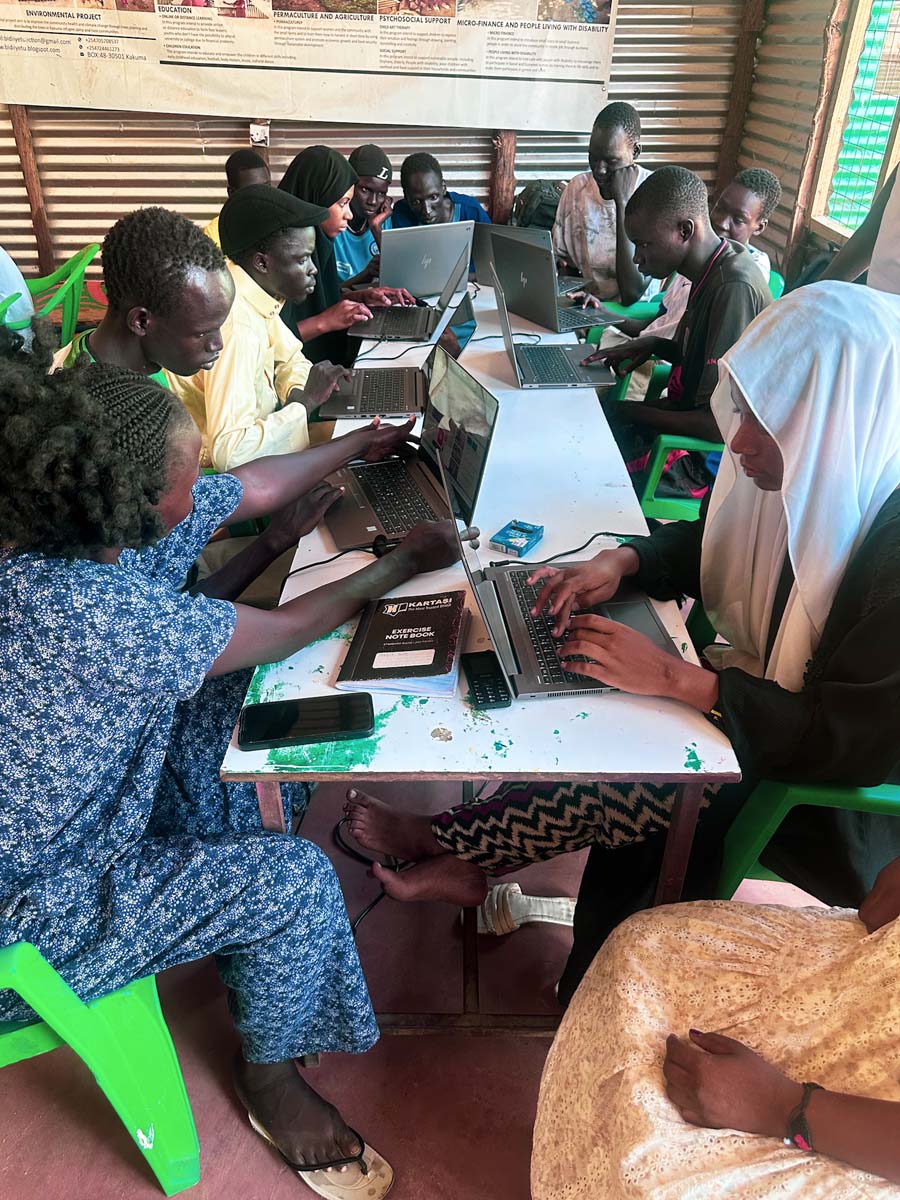
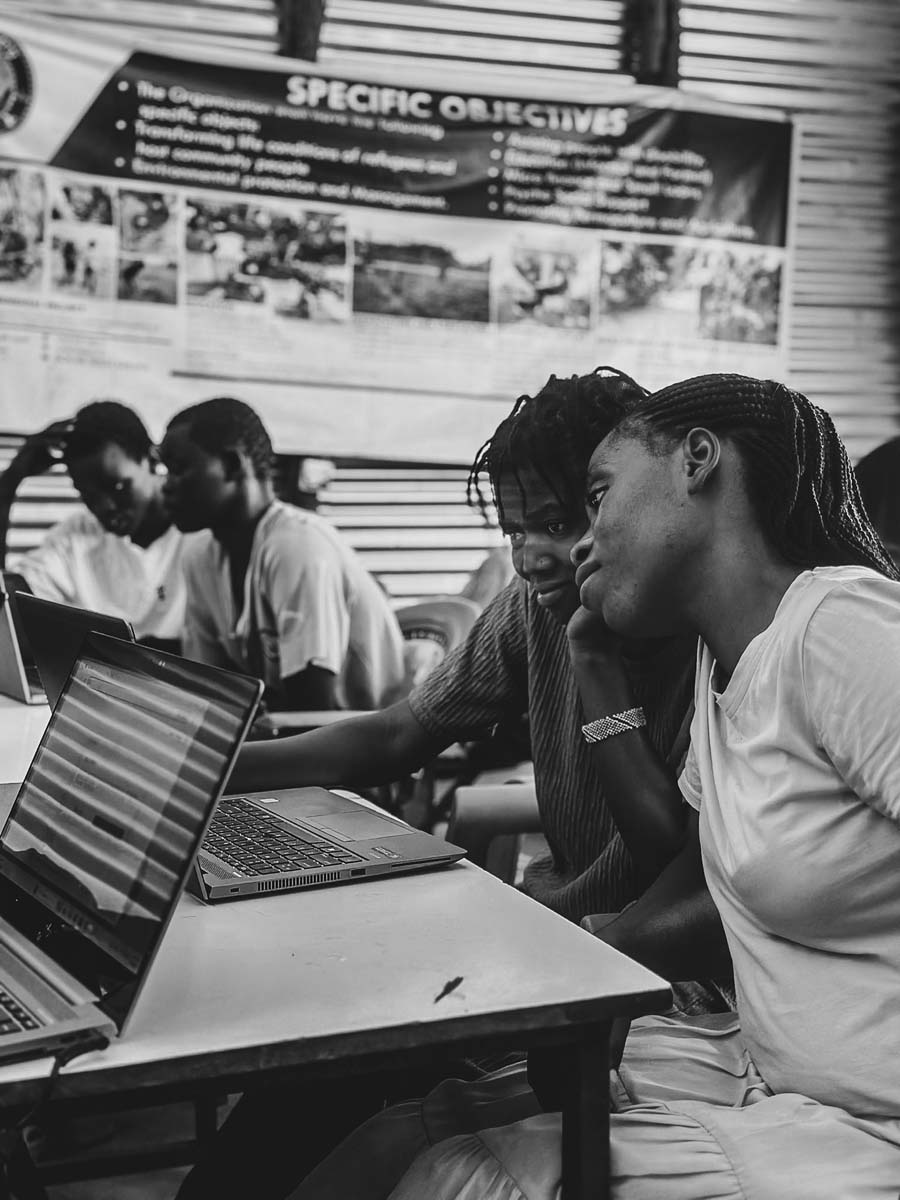
Bidii Yetu means "our effort." I like that the name doesn't say "our gift" or "our charity." By the time the machines were switched on, "ours" included a lot of people: Vincent, who made the introduction; Pui Ching students in Hong Kong and their teacher (who is also mine); Leslie, who organised part I of this project; Caritas, who provided the computer parts and guidance; Gody, an old friend from Arusha; Janis, a photographer; and Martin and the Bidii Yetu team. Most of all, it includes the young people of Kakuma, whose effort starts now.
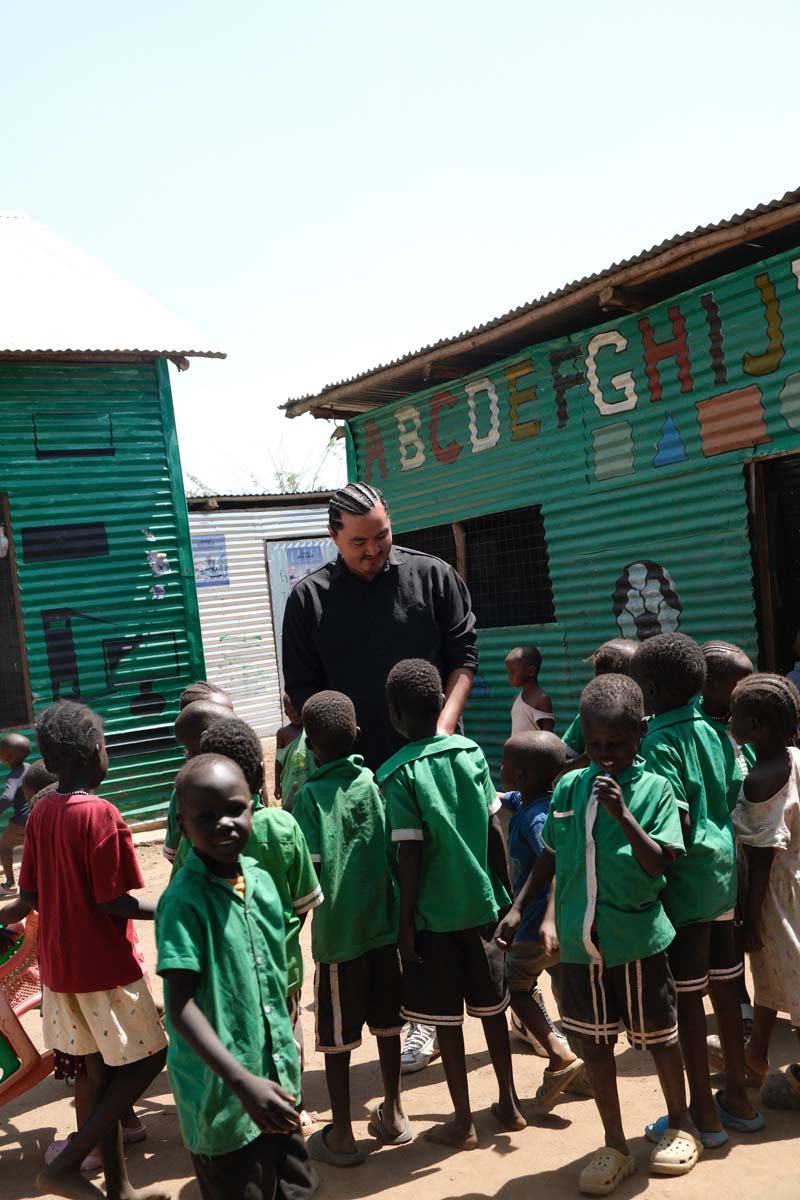
Photo: Janis Chan
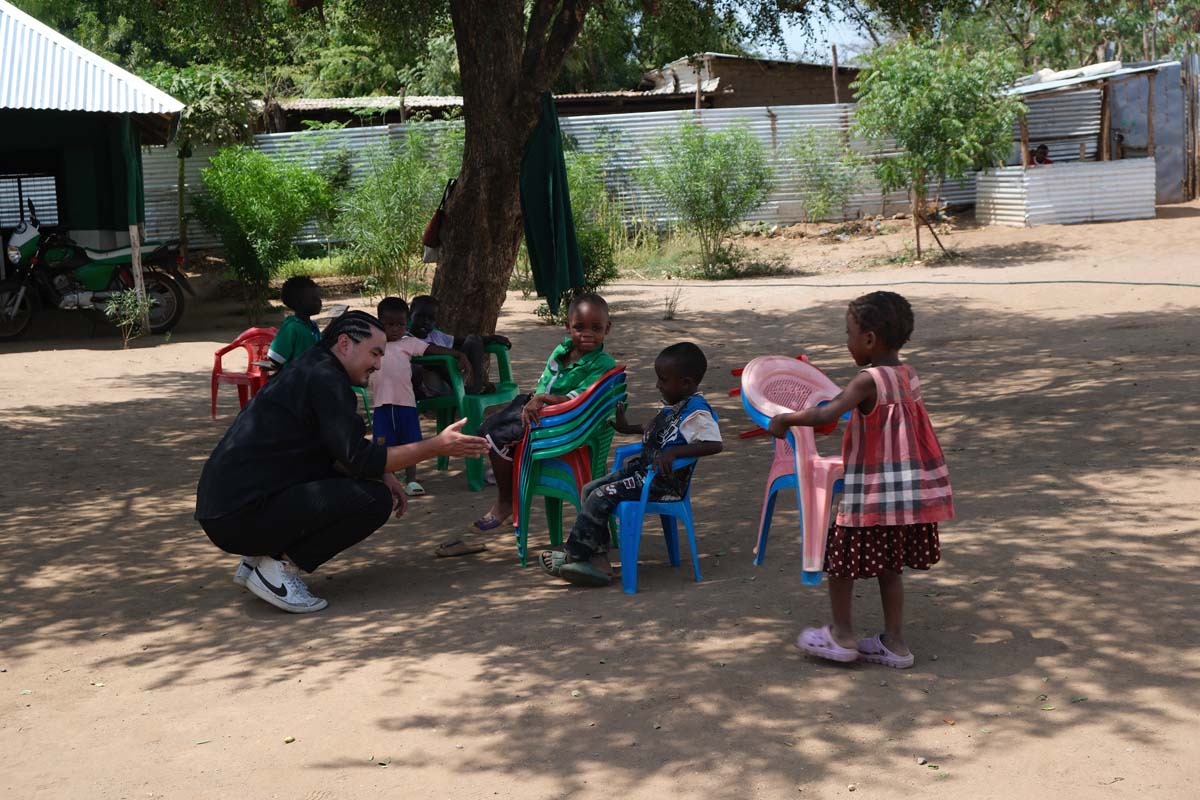
This is where C.U.P. concludes, and where the café begins. Fingers crossed. But just like every start-up, pivot happens. That's how things should be, as long as it is for the better. And I trust that the team on the ground has every intention to do good.
Next, in Part 2: The Construction Without Men, from Dar es Salaam.

